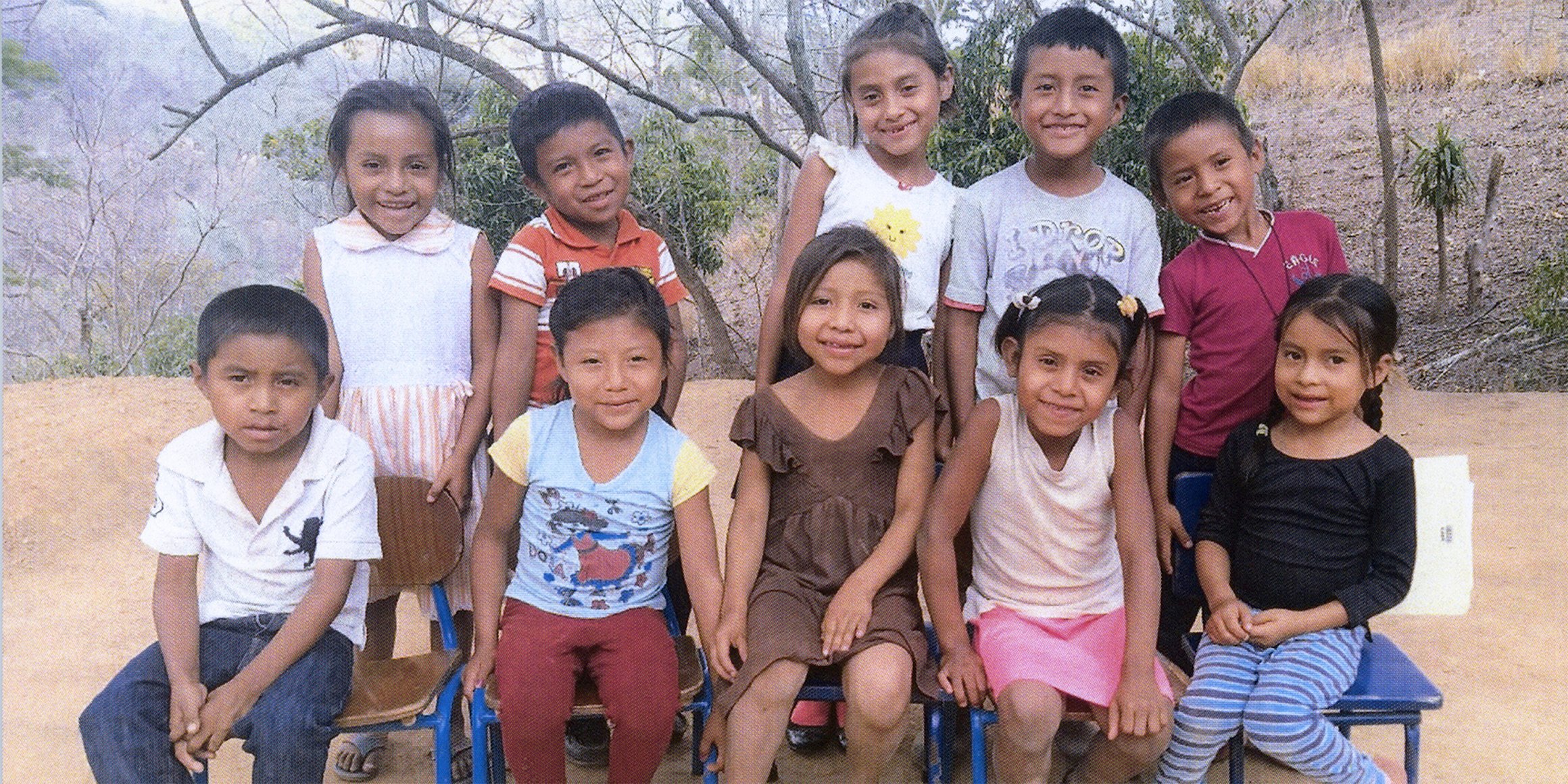


Bahía del Duque promotes Ayuda en Acción’s charity project ‘What can you do with 1€?

For 25 years, the Hotel Bahía del Duque has sponsored communities of children in nine countries in collaboration with the NGO Ayuda en Acción through the initiative ¿Qué se puede hacer con 1€? (What Can Be Done with €1?) 

The project ¿Qué se puede hacer con 1 euro? (What Can Be Done with €1?) is an initiative led by the NGO Ayuda en Acción (Help in Action) with the collaboration of the Hotel Bahía del Duque. It has met with great success thanks to the generous contributions of the Hotel’s guests. Its main objective is to give its members access to present and future opportunities, focusing on the most underprivileged communities in nine countries.

An initiative without borders

Through this charitable programme, guests who wish to collaborate agree to donate one euro, which is added to their bill at the end of their stay. The funds raised with our guests’ contributions allow us to sponsor 40 groups of children in Colombia, Bolivia, El Salvador, Nicaragua, Paraguay, Peru, Ecuador, Honduras, Ethiopia and Uganda.

The Hotel’s director, Cristina de Juan, explains, “At Bahía del Duque, we are deeply involved in these kinds of initiatives. As a family-oriented hotel, we’re greatly concerned with all matters involving children and their well-being. Because of this deep commitment, some of our staff correspond regularly with the sponsored communities”.

On more than one occasion, the contributions of our guests have surpassed our collection goals, resulting in the donation of the remaining funds to Ayuda en Acción as a means of collaboration in diverse projects, such as Proyecto Los Andes (The Andes Project). In 2009, this led to two bridges in Ecuador, specifically on the Pungadahua and Punahua Rivers. The bridges helped improve transit between the local communities, which inhabit a subtropical Andes region. It also allowed the construction of a school cafeteria in Ecuador that was inaugurated as “Pichincha” and is located in Guaranda Canton, where 45 children of the Mulidiahuan community receive schooling and a more balanced diet as a result of the initiative.

Another project that was set in action was that of Boloso Sore (Ethiopia), which saw in 2016 the construction of three schools, with a total of 499 boys and girls enrolled. In 2017, the guests of Bahía del Duque helped Ayuda en Acción to set up six latrines, two for each school, which contributed to reducing the risk of infections and prevented the harassment of the girls, as well as lowering the truancy of the students of either gender.

More recently, we have collaborated with the project La regla de tres (the Rule of Three), which focuses on the education and rights of Ethiopian women.

A hotel with a commitment

At Bahía del Duque sustainability is part of our mission and inspires us to do our part to make a better world possible. We implement strategies that promote the well-being of our employees and environmental sustainability, and we collaborate actively in the development of local and international communities.

Decades of dedication to helping others

For over 40 years, Ayuda en Acción has helped eradicate poverty and inequality, contributing to the improvement of the nutrition, health, and education of over 2.5 million children and their families. At this time, the NGO is present in 18 countries in Latin America, Africa, and Asia and has also led initiatives in Spain in recent years.

 

Newsletter

Through this subscription, you will receive information of your interest about the Hotel Bahía del Duque.

Newsletter

A través de esta suscripción, recibirá información de su interés sobre el Hotel Bahía del Duque.

Cookie Policy

Cookies policy

What are cookies?

Cookies are files that can be downloaded to your computer through web pages. They are tools that play an essential role in the provision of numerous services of the information society. Among others, they allow a web page to store and retrieve information about the browsing habits of a user or their equipment and, depending on the information obtained, they can be used to recognize the user and improve the service offered.

Types of cookies

Depending on who is the entity that manages the domain from where the cookies are sent and treats the data obtained, two types can be distinguished:

• Own cookies: those that are sent to the user's terminal equipment from a computer or domain managed by the editor itself and from which the service requested by the user is provided.

• Third-party cookies: those that are sent to the user's terminal equipment from a computer or domain that is not managed by the publisher, but by another entity that processes the data obtained through cookies.

In the event that cookies are installed from a computer or domain managed by the publisher himself, but the information collected through them is managed by a third party, they cannot be considered as own cookies.

There is also a second classification according to the period of time that they remain stored in the client's browser, which may be:

• Session cookies: designed to collect and store data while the user accesses a web page. They are usually used to store information that is only of interest for the provision of the service requested by the user on that single occasion.

• Persistent cookies: the data is still stored in the terminal and can be accessed and processed for a period defined by the person responsible for the cookie, which can range from a few minutes to several years.

Finally, there is another classification with five types of cookies according to the purpose for which the data obtained is processed:

• Technical cookies: those that allow the user to navigate through a web page, platform or application and use the different options or services that exist in it, such as, for example, controlling traffic and data communication, identifying the session, access parts of restricted access, remember the elements that make up an order, carry out the process of purchasing an order, make a request for registration or participation in an event, use security elements while browsing, store content for dissemination of videos or sound or share content through social networks.

• Personalization cookies: allow the user to access the service with some predefined general characteristics based on a series of criteria in the user's terminal, such as the language, the type of browser through which to access the service, the regional configuration from where to access the service, etc.

• Analysis cookies: they allow the person responsible for them to monitor and analyze the behavior of the users of the websites to which they are linked. The information collected through this type of cookies is used to measure the activity of the websites, application or platform and to create navigation profiles of the users of these sites, applications and platforms, in order to introduce improvements  based on the analysis of the usage data made by the users of the service.

• Advertising cookies: allow the management, in the most efficient way possible, of the advertising spaces.

• Behavioral advertising cookies: they store information on the behavior of users obtained through the continuous observation of their browsing habits, which allows the development of a specific profile to display based on such behavior.

• Cookies from external social networks: they are used so that visitors can interact with the content of different social platforms (facebook, youtube, twitter, linkedIn, etc.) and that are generated only for users of said social networks. The conditions of use of these cookies and the information collected are regulated by the privacy policy of the corresponding social platform.

Deactivation and elimination of cookies

You have the option to allow, block or delete the cookies installed on your computer by configuring the browser options installed on your computer. By deactivating cookies, some of the available services may no longer be operational. The way to disable cookies is different for each browser, but it can usually be done from the Tools or Options menu. You can also consult the Help menu of the browser where you can find instructions. The user may at any time choose which cookies he wants to work on this website.

You can allow, block or delete the cookies installed on your computer by configuring the browser options installed on your computer:

• Microsoft Internet Explorer o Microsoft Edge:

http://windows.microsoft.com/es-es/windows-vista/Block-or-allow-cookies

• Mozilla Firefox: http://support.mozilla.org/es/kb/impedir-que-los-sitios-web-guarden-sus-preferencia

• Chrome: https://support.google.com/accounts/answer/61416?hl=es

• Safari: http://safari.helpmax.net/es/privacidad-y-seguridad/como-gestionar-las-cookies/

• Opera: http://help.opera.com/Linux/10.60/es-ES/cookies.html